Kingflex Kingflex

How to Choose 15mm Insulation Pipe for Global Buyers?

Time:2026-10-09 Author:Madeline
0%

Choosing the right 15mm Insulation Pipe is not simply a matter of matching one measurement. For global buyers, the decision affects energy loss, condensation control, installation speed, and long-term maintenance. A pipe with a 15mm internal diameter may require different insulation thicknesses, depending on climate, temperature, and application. Check the actual pipe outside diameter first. Small errors can create loose joints, crushed insulation, or hidden thermal bridges.

Dr. Joseph Lstiburek, a respected building-science expert, often reminds professionals, “You can’t fix what you can’t see.” That principle matters here. Inspect the pipe route, including elbows, valves, wall penetrations, and exposed connections. A high-quality 15mm Insulation Pipe should fit tightly without excessive compression. Its material should suit the working temperature, moisture conditions, and expected service life. For chilled-water systems, closed-cell insulation can help limit condensation. For hot-water lines, heat resistance and dimensional stability deserve closer attention.

Global purchasing adds another layer. Buyers should verify product dimensions, tolerance ranges, fire-performance information, packaging, and test documentation. Supplier experience matters, but certificates alone are not enough. Ask for samples. Measure them. Test the fit on the actual pipe. This step may feel slow, yet it prevents expensive rework. Some specifications remain unclear, especially when suppliers use different regional standards. That is a weakness worth acknowledging. This guide therefore focuses on practical comparison, transparent questions, and evidence-based selection. The best choice is rarely the cheapest product. It is the one that performs reliably in its real installation environment.
How to Choose 15mm Insulation Pipe for Global Buyers?

Define the Purpose and Application of 15mm Insulation Pipe

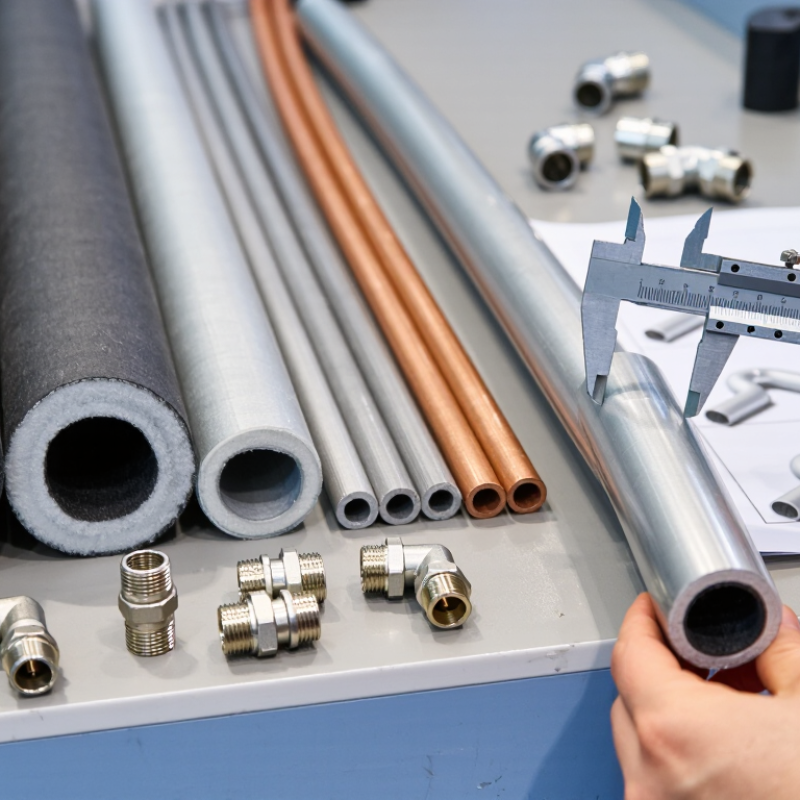
Choosing a 15mm insulation pipe begins with defining its actual purpose. In most projects, 15mm refers to the pipe’s nominal outside diameter, not the insulation’s final size. Measure the installed pipe carefully. A few millimeters can affect fitting and performance.

For domestic hot-water lines, insulation should reduce heat loss and protect workers from hot surfaces. Closed-cell foam is often practical because it limits water absorption. In chilled-water or refrigeration systems, moisture resistance becomes more critical. Even a small opening at a joint can allow condensation and damage nearby materials. Check the operating temperature, wall thickness, flexibility, and required fire performance before purchasing.

The installation environment matters. Pipes behind walls need space for bends and service access. Outdoor systems require protection from ultraviolet exposure, rain, and mechanical impact. In crowded plant rooms, thinner insulation may fit better, but it can reduce thermal efficiency. That trade-off deserves careful review.

Field inspections often find gaps around valves and elbows. These details are easy to overlook. They should not be. Buyers should request test data, dimensional tolerances, and compliance documents for the destination market. Product descriptions are not enough. A pipe labeled “15mm” may fit differently across regions and standards, so confirm measurements with drawings and samples. No selection is perfect. The wrong assumption at the design stage can become an expensive repair later.

Check Pipe Size, Wall Thickness, and Insulation Performance

When global buyers choose a 15mm insulation pipe, the stated size needs careful checking. “15mm” may describe the inner diameter, outer diameter, or a nominal size. Ask for a dimensional drawing and measure the pipe installed on site. A loose fit creates air gaps. A tight fit can split the insulation during installation. Compare the pipe’s outside diameter with the insulation’s inside diameter, not just the catalogue label. This small detail often decides whether the finished system performs well.

Wall thickness should match the temperature, environment, and mechanical risk. Thicker insulation usually reduces heat transfer, but it also needs more space around valves, bends, and supports. For chilled-water lines, inspect vapour resistance and seam quality. Moisture can reduce insulation performance over time. For hot-water applications, check continuous service temperature and dimensional stability. Request test data for thermal conductivity, water absorption, and fire behaviour. The results should show test methods and conditions. In practice, buyers sometimes focus too heavily on thickness. That is an easy mistake.

Tips: Keep samples from different batches. Check their inner diameter, wall thickness, surface finish, and flexibility. Test a short section on an actual pipe before placing a large order. Recheck measurements after installation, because site conditions are rarely perfect.

How to Choose 15mm Insulation Pipe for Global Buyers? - Check Pipe Size, Wall Thickness, and Insulation Performance

Selection Item Recommended Specification Typical Dimension or Value Insulation Performance Suitable Application Buyer Checkpoint
Pipe outside diameter Confirm that “15mm pipe” means a 15mm outside diameter 15.0mm nominal outside diameter; some PEX and multilayer systems may use 16mm The insulation inner diameter should be slightly larger than the actual pipe OD to allow installation Copper, stainless steel, PEX, PE-RT, and multilayer pipes, subject to actual dimensions Measure the actual pipe OD rather than relying only on nominal size or thread size
Insulation inner diameter Select an ID that fits closely without excessive compression Approximately 15–16mm ID for a 15mm pipe; verify tolerance and slit design A close fit reduces air gaps and helps maintain the calculated thermal resistance General hot-water, chilled-water, heating, and plumbing installations Check ID tolerance, recovery after compression, and whether the product is pre-slit or unslit
Light insulation 6mm wall thickness Approximate outside diameter: 27–28mm for a 15mm pipe Approximate cylindrical thermal resistance: 2.7m·K/W at λ = 0.035W/m·K Basic condensation control and limited heat-loss reduction in mild indoor conditions Not normally preferred for long-term outdoor exposure or demanding chilled-water systems
Standard insulation 9mm wall thickness Approximate outside diameter: 33–34mm for a 15mm pipe Approximate cylindrical thermal resistance: 3.6m·K/W at λ = 0.035W/m·K Domestic hot-water pipes, heating pipes, and general indoor plumbing A practical balance between insulation efficiency, material use, and installation space
Enhanced insulation 13mm wall thickness Approximate outside diameter: 41–42mm for a 15mm pipe Approximate cylindrical thermal resistance: 4.6m·K/W at λ = 0.035W/m·K Higher hot-water energy retention, colder rooms, and many commercial plumbing projects Confirm that pipe clips, penetrations, channels, and protective sleeves can accommodate the larger OD
High-performance insulation 19mm wall thickness Approximate outside diameter: 53–54mm for a 15mm pipe Approximate cylindrical thermal resistance: 5.7m·K/W at λ = 0.035W/m·K Low-temperature heating, exposed service areas, and projects with stricter heat-loss targets Check installation clearance, fire requirements, moisture resistance, and mechanical protection
Maximum practical insulation 25mm wall thickness Approximate outside diameter: 65–66mm for a 15mm pipe Approximate cylindrical thermal resistance: 6.7m·K/W at λ = 0.035W/m·K High heat-retention requirements, unheated spaces, and selected industrial or commercial systems Use only when space, support, bending radius, and project specifications permit the large diameter
Thermal conductivity Lower λ-value generally indicates better insulation performance Common elastomeric and polyethylene insulation values are approximately 0.030–0.040W/m·K, depending on temperature and test method Do not compare λ-values unless the mean test temperature and standard are the same All applications where energy efficiency or condensation control is important Request declared λ-values at the intended operating temperature, not only a single room-temperature value
Water-vapour resistance Closed-cell structure or a continuous vapour barrier Water-vapour transmission performance is material-specific; check the declared μ-value or equivalent rating Important for chilled-water pipes where surface condensation can damage nearby structures Air-conditioning, refrigeration, chilled-water, and humid-climate installations Seal longitudinal joints, ends, fittings, and penetrations to maintain vapour-barrier continuity
Temperature range Select insulation rated for the actual minimum and maximum pipe temperature Typical flexible products may cover approximately −40°C to +105°C, but the exact range varies by material and construction Thermal conductivity and dimensional stability can change significantly with temperature Hot-water, heating, cooling, and low-temperature applications Check continuous service temperature, peak temperature, shrinkage, and compatibility with the pipe material
Fire performance Verify the fire classification required in the destination market Fire ratings differ by product, thickness, installation method, and national test system Insulation performance does not replace fire-performance compliance Residential, commercial, public, and industrial buildings Request test reports for the relevant market and confirm whether the rating applies to pipe insulation assemblies
Dimensional tolerance Review ID, wall-thickness, length, and ovality tolerances Actual dimensions can vary by manufacturing process and temperature Consistent wall thickness supports predictable heat-loss and condensation calculations Large-volume international projects and prefabricated pipe systems Approve a production sample before bulk shipment and check packaging against compression damage
International documentation Obtain technical data, safety information, and conformity documents Documentation should state dimensions, density, λ-value, temperature range, water-vapour resistance, and fire performance Complete data enables comparison across climates, standards, and installation conditions Global procurement, customs clearance, tender submissions, and project approval Check the applicable local standards, language requirements, labeling rules, and sustainability declarations

Technical note: Approximate outside diameters are calculated as pipe outside diameter plus twice the insulation wall thickness. The indicative cylindrical thermal-resistance values assume a 15mm pipe, uniform insulation, and λ = 0.035W/m·K; actual performance depends on temperature, density, moisture, joints, supports, and installation quality.

Compare Materials for Temperature, Moisture, and Chemical Resistance

How to Choose 15mm Insulation Pipe for Global Buyers?

For a 15mm insulation pipe, material selection should follow the operating environment, not price alone. Flexible elastomeric foam typically offers thermal conductivity around 0.033–0.040 W/m·K at standard test temperatures, according to values reported under EN 12667 and EN 14304 methods. Phenolic foam can reach approximately 0.020–0.025 W/m·K, giving stronger thermal performance in compact spaces. Mineral wool generally tolerates higher temperatures, but its fibers and open structure require careful jacketing.

Moisture changes the decision. Closed-cell elastomeric foam usually provides high resistance to water vapor when seams are sealed correctly. ASHRAE Handbook guidance emphasizes that damaged vapor barriers can sharply reduce insulation performance. Mineral wool needs a continuous weatherproof facing in humid areas. It can absorb water through gaps. That is not a small detail. At 15mm thickness, even a poorly sealed joint can create a cold bridge and surface condensation.

Chemical exposure requires a separate check. ASTM C534 and C1126 classify elastomeric and cellular-glass insulation systems, but resistance still depends on chemical concentration, temperature, and contact time. Cellular glass handles moisture well and resists many industrial chemicals, yet it is rigid and vulnerable to impact at fittings. Polyethylene is lightweight and economical, but its temperature range and solvent resistance may be limited. A common purchasing mistake is trusting a generic “chemical resistant” claim. Request test data, service temperature, water-vapor permeability, and compatibility evidence for the exact fluid. Real installations are less forgiving than catalog tables.

Evaluate Fire Safety, Standards, and Global Certification Requirements

For global buyers, a 15 mm insulation pipe is not automatically fire-safe. Thickness only describes geometry. It does not prove flame spread, smoke behavior, or toxicity. The UNEP 2023 Global Status Report states that buildings used about 30% of global final energy in 2022. Energy efficiency matters, but fire performance requires separate evidence. Specify the material, density, facing, adhesive, and installation position before comparing prices.

Request EN 13501-1 classification for European projects, or ASTM E84 test evidence for North American specifications. EN 13501-1 addresses reaction to fire, smoke production, and flaming droplets. ASTM E84 reports flame-spread and smoke-developed indices. These systems are not interchangeable. Do not convert one rating into another without technical justification. NFPA estimated about 1.39 million fires in the United States during 2023, reinforcing the need for documented protection rather than attractive claims.

Check the certificate scope carefully. It should identify the exact 15 mm product, diameter range, jacket, adhesive, and pipe substrate. Confirm certificate validity and factory surveillance. A flat-board test may not represent a closed pipe, joint, or ceiling penetration. The seam is often the weak point. Ask for installation drawings and local authority acceptance. I would also question certificates with unclear English translations, missing test dates, or no fire-classification limitations. A perfect document can still hide an imperfect installation.

Select Suppliers Based on Quality, Cost, Packaging, and Delivery Terms

Choosing a 15mm insulation pipe starts with confirming the actual pipe diameter, insulation thickness, temperature range, and moisture exposure. “15mm” can describe different dimensions in different markets. Ask suppliers for test reports covering thermal conductivity, flame performance, water resistance, and dimensional stability.

UNEP’s 2023 Global Status Report states that buildings consume about 34% of global energy and produce around 37% of energy and process-related emissions. Reliable insulation can reduce heat loss, but performance depends on correct installation and sealed joints.

Cost should include transport, import handling, protective packaging, and replacement risk. A cheaper product may contain uneven walls or compress during shipping. That mistake is expensive. Compare quotations using the same specifications and quantity basis.

Packaging should protect pipe ends from dust, sunlight, and crushing. Request carton dimensions, pallet details, loading photos, and moisture-control measures. Delivery terms must state production time, inspection timing, port, documents, and responsibility for damage.

The World Bank’s 2023 Logistics Performance Index highlights customs, infrastructure, and shipment timeliness as major logistics factors.

Tips: Order samples before mass production. Measure inner diameter and wall thickness personally. Check at least three batches. Add a small inspection allowance, because forecasts are rarely perfect. Review whether the supplier can replace damaged cartons quickly. A strong supplier offers clear evidence, not only attractive promises. Keep records of test results, packaging approval, and delivery changes.

FAQS

What does “15mm insulation pipe” usually mean?

It usually describes the pipe’s nominal outside diameter. Measure the installed pipe before ordering. A few millimeters can affect fitting, bends, and performance.

Which insulation material suits domestic hot-water lines?

Flexible closed-cell foam is often practical for hot-water lines. It helps reduce heat loss and limits water absorption. It should also protect people from hot surfaces.

What matters most for chilled-water or refrigeration pipes?

Moisture resistance becomes especially important. Seal every joint carefully to prevent condensation. One small opening can damage walls, ceilings, or nearby materials.

Is thinner insulation always better in crowded plant rooms?

Not necessarily. Thinner insulation saves space but may reduce thermal efficiency. Review the clearance, operating temperature, and energy trade-off before choosing.

How should outdoor insulation be protected?

Outdoor systems need protection from ultraviolet exposure, rain, and impact. Use a continuous weatherproof covering. A damaged surface can quickly reduce insulation performance.

Which material is suitable for high-temperature areas?

Mineral wool generally tolerates higher temperatures than many flexible foams. However, it needs careful jacketing because its structure can absorb moisture. The best choice depends on the actual service temperature.

How should chemical resistance be checked?

Do not rely on a general “chemical resistant” claim. Request evidence for the exact fluid, concentration, temperature, and contact time. Polyethylene may be economical, but its solvent resistance can be limited.

What installation details are commonly missed?

Inspect valves, elbows, bends, and pipe joints carefully. Gaps often appear around these areas. They should not be ignored. A continuous seal is more important than a perfect-looking straight section.

What documents should global buyers request?

Request dimensional tolerances, temperature limits, moisture data, and fire-performance information. Ask for compliance documents for the destination market. Drawings and physical samples can reveal differences that descriptions hide.

Can the lowest-cost insulation pipe be the right choice?

Sometimes, but price alone is a weak basis for selection. Moisture, temperature, chemicals, space, and installation quality all matter. No choice is perfect. A cheap product may become an expensive repair later.

Conclusion

Choosing the right 15mm Insulation Pipe starts with understanding its intended application, such as protecting water lines, reducing heat loss, preventing condensation, or improving energy efficiency in residential, commercial, and industrial systems. Global buyers should confirm the pipe’s inner diameter, wall thickness, insulation density, and thermal performance to ensure compatibility with the installation environment. Material selection is also important, as different insulation materials offer varying levels of resistance to temperature changes, moisture, chemicals, and aging.

Buyers should also review fire safety ratings, applicable technical standards, and certification requirements in the destination market. A reliable supplier should provide consistent quality, clear product specifications, practical packaging, and stable production capacity. In addition to unit price, buyers should compare total purchasing costs, minimum order quantities, delivery schedules, payment terms, and after-sales support. By evaluating performance, compliance, supplier reliability, and logistics together, purchasers can select a 15mm Insulation Pipe that offers dependable protection and long-term value.

Madeline

Madeline

Madeline is a dedicated marketing professional with a wealth of expertise in our company's core offerings. With a keen understanding of the industry, she brings a unique perspective to her role, consistently delivering high-quality content that highlights the superior aspects of our products. As......